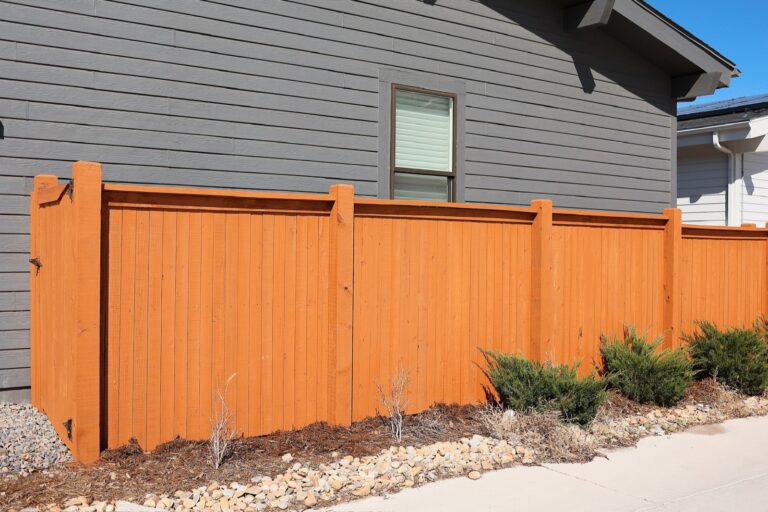
Here is the short answer. Oil-based stain soaks into the wood and protects from within. Water-based stain forms a tough, flexible layer that protects from the surface. Neither one is “the best.” Oil tends to win on dry, thirsty, weathered wood. Modern water-based acrylics tend to win where sun, moisture, and mildew hit hard and where you want easier upkeep. The right call depends on your wood, your exposure, and your climate. Here is how we think it through on real fences and decks.
How the two chemistries actually work
Oil-based (alkyd) stains: protection by penetration
Traditional oil-based stains are built on alkyd or natural oil binders carried in a solvent. Brushed on, the oil wicks down into the wood fibers instead of sitting on top. That penetration conditions dry wood, and it means there is no surface film to peel. When an oil finish wears, it fades gradually, which makes the next coat simple: clean the wood and apply again.
The tradeoffs: oils cure slowly, carry stronger fumes, can feed mildew in damp climates unless the formula includes a mildewcide, and some darken or amber with age.
Water-based (acrylic) stains: protection by film
Water-based stains use acrylic or acrylic-blend resins carried in water. Instead of soaking deep, they bond to the surface and build a thin, flexible film. Early versions earned a shaky reputation, but modern acrylics resist UV fade well, stay flexible as boards swell and shrink, hold their color instead of ambering, and resist mildew better because there is no natural oil to feed it.
The catch is that a film can peel if it goes over dirty, damp, or glazed wood. With water-based products, prep is everything. Done right, the film flexes and lasts. Done wrong, it lets go in sheets.
What Colorado sun does to a finish
Along the Front Range, from Denver and Aurora out to Evergreen and Castle Rock, the enemy is ultraviolet light. At high altitude the atmosphere filters less UV, and with roughly 300 days of sun a year, deck boards take a beating. UV breaks down the lignin that holds wood fibers together, and it breaks down the finish itself. How hard that UV actually lands depends on where the house sits, which our Front Range exposure guide breaks down.
What matters most against UV is pigment, in either chemistry. Pigment absorbs and reflects UV before it reaches the wood, which is why a semi-transparent or solid finish outlasts a clear one. Beyond pigment, quality acrylics hold their color in strong sun, while penetrating oils recondition wood that Colorado’s dry air keeps pulling moisture out of. Freeze-thaw cycles work boards open and shut all winter too, so flexibility counts. This is why we match the product to the surface instead of carrying one can for every job.
What Austin humidity does to a finish
Greater Austin flips the problem. From Round Rock to Kyle, wood spends much of the year warm and damp. Humidity slows curing, feeds mildew, and keeps moisture cycling through fence pickets and deck boards. On cedar, which is everywhere in Central Texas, natural extractives add their own wrinkle.
In that environment, mildew resistance moves up the priority list, and water-based acrylics have an edge, since they carry no natural oils for mildew to feed on. Timing matters too. Any stain needs dry wood and a dry window to cure, so in Austin the schedule around weather is part of the craft.
The practical differences homeowners actually feel
- How it fails. Oil fades and wears thin. Water-based films can peel if prep was poor. Gradual fading is easier to live with and easier to recoat.
- Recoat window. Recoat a penetrating oil when water stops beading and the color has thinned. Water-based films run a similar schedule, but the surface must be cleaned first so the new coat can bond.
- Dry time and smell. Water-based dries faster with far less odor. Oil cures slower and smells stronger while it does.
- Cleanup. Water-based cleans up with soap and water. Oil requires mineral spirits, and oily rags must be handled carefully because they can self-heat.
- Low-VOC options. Water-based stains are naturally lower in volatile organic compounds. If fumes are a concern for your family, pets, or an HOA, ask us. Golden Stain offers low-VOC options on request.
- Color stability. Acrylics tend to hold their tone. Some oils amber or darken with age.
When each one wins
Reach for oil-based when
- The wood is older, dry, and thirsty, and needs conditioning as much as color.
- You want a finish that fades out instead of peeling, with simple clean-and-recoat maintenance.
- You are staining rough-sawn fencing that drinks stain deep into the grain.
Reach for water-based when
- Mildew pressure is high, as it is across greater Austin.
- You want low odor, low VOC, fast dry, and easy soap-and-water cleanup.
- You want long color retention under intense sun, in a properly prepped semi-transparent or solid finish.
- The existing finish is already water-based and sound, since like-over-like bonds best.
The honest part: prep decides more than chemistry
We have restored hundreds of fences and decks across Colorado and greater Austin, and here is the truth the can does not tell you. The difference between a finish that lasts and one that fails early is usually not oil versus water. It is prep. Clean wood, sound boards, the right moisture level, and a hand-brushed, back-brushed application beat a premium product slapped over gray, dirty, or damp lumber every time. That is why our crew pressure washes, repairs what needs repairing, lets the wood dry, and only then opens the stain, and why we can put our warranty in writing before work starts: 1 year on transparent, 2 years on semi-transparent, 3 years on solid stain.
Frequently asked questions
Is oil-based or water-based stain better for a Colorado deck?
It depends on the deck. Dry, weathered wood often benefits from a penetrating oil that conditions the fibers. If you want maximum color retention under high-altitude UV with easy maintenance, a quality water-based acrylic in a semi-transparent or solid tone is a strong choice. Pigment matters more than chemistry for UV, and prep matters more than both.
Can I put water-based stain over an old oil-based stain?
Often yes, but only after the old finish has weathered and the wood is thoroughly cleaned, and sometimes lightly sanded, so the new coat can bond. Putting a film over a slick or oily surface is how peeling starts. When switching chemistries, we test adhesion first rather than guessing.
How do I know when my stain is due for another coat?
Sprinkle water on the boards. If it soaks in quickly instead of beading, a penetrating stain is done protecting. Visible graying, thin spots on high-traffic boards, and washed-out color are the same message. Recoating a little early is always cheaper than restoring bare, gray wood.
Do low-VOC stains hold up as well as regular ones?
Modern low-VOC formulas perform well on properly prepped wood. The label describes what evaporates during curing, not the durability of the resin left behind. We offer low-VOC options on request and back them with the same written warranty.
Which stain smells less and dries faster?
Water-based, by a wide margin. It dries quickly with little odor, which matters near open windows, pets, and play areas. Oil needs longer to cure and smells stronger while it does.
Get your free estimate
You do not have to become a coatings chemist to get this right. Tell us about your fence or deck, and we will look at the wood, the exposure, and any old finish, then recommend oil or water-based honestly, with the warranty in writing before we start. Free on-site estimate. No pressure, no obligation, ever. Call Golden Stain at 720-233-5487 or email info@goldenstain.com to get my free estimate.
Explore more
Ready for the real thing? Browse all our services, the areas we serve across Colorado and Austin, and our home-care journal, then call 720-233-5487 for a free estimate.