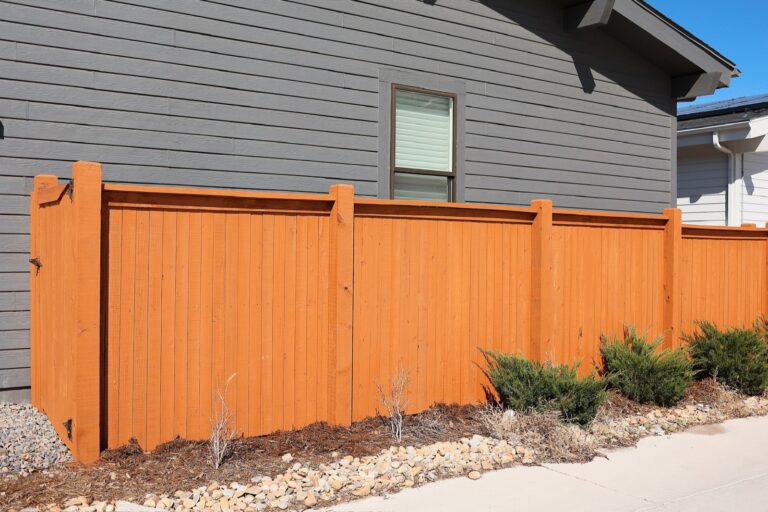
A wood finish tells you exactly how it is doing, if you know how to read it. Graying means UV is eating exposed wood. Peeling means a film has lost its grip. Water soaking in flat instead of beading means the protection is spent. Each symptom points to a different cause and a different fix, and catching them early is the difference between an easy recoat and a full restoration. Here is how we read a deck or fence, symptom by symptom. A few of those symptoms point past the finish to the structure, which is exactly what happened on the Denver deck we rebuilt from the footings up.

The one-minute test before you read anything else
Start with the droplet test. Sprinkle a little water on a horizontal board in a few spots, including a high-traffic path and a sun-baked area. Watch what happens:
- Water beads up and sits. The finish is still repelling moisture. You have time.
- Water darkens the wood and soaks in within a minute or two. The finish has stopped protecting, even if the color still looks decent.
This test matters because color is a lagging indicator. A stain can look acceptable from the patio door months after it has stopped repelling water. Absorbed moisture is what drives the expensive problems: swelling, cupping, cracking, and rot at fasteners and joints.
Graying: UV is working on bare wood
Silvery gray wood is not dirt and it is not rot. It is ultraviolet light breaking down lignin, the natural glue that binds wood fibers, leaving a thin layer of dead gray cells on the surface. Once you see gray, the stain in that spot is gone and the wood itself is weathering.
In Colorado this happens fast. High-altitude sun and roughly 300 days of it a year mean south- and west-facing fences and open deck boards gray sooner than the shaded side of the same structure. Graying is surface-deep, and proper prep removes the dead fibers to expose sound wood underneath. But that surface has no UV protection right now. A gray patch spreading along the top rails or the sun side is your restain notice.
Peeling and flaking: the film has let go
Peeling is a different disease. Penetrating finishes fade away. Film-forming finishes, mostly solid stains and heavy buildups of old coats, fail by losing adhesion. You will see lifted edges, flakes in the grass below a fence, or sheets releasing along deck board edges.
Peeling means the finish went over damp, dirty, or glazed wood, moisture is pushing up from underneath, or stacked coats have gone brittle. Whatever the cause, you cannot recoat over it. New stain bonds to the failing layer and peels with it. The loose material has to come off, sometimes in a full strip, before anything new goes on. Catch it in one corner and the fix is contained. Ignore it for two seasons and it is the whole deck.
Water spots and blotching: moisture is moving through the wood
Dark rings, blotchy patches, and tide lines that stay after the boards dry mean water is getting into the wood unevenly, sitting in some fibers longer than others. You will see it under planters, around grill areas, below roof driplines, and anywhere snow piles up. Spotting flags the places that will decay first, because the wood there stays wet longest. If spots keep growing or boards feel soft under a screwdriver tip, you are moving past staining into board repair, which is why our staining work includes board repair and replacement.
Checking and cracking: the wood is cycling wet and dry
Small surface cracks along the grain are called checking. They appear when unprotected wood cycles wet and dry, swelling and shrinking until the surface splits. Colorado freeze-thaw accelerates it, because water in those cracks freezes and wedges them wider. Light checking is normal on weathered wood, and a fresh penetrating stain slows it down. Deep, widening cracks, especially across the board rather than along it, are structural complaints, and those boards should be evaluated for replacement during prep.
Tannin bleed: the wood’s own color is escaping
Brown or reddish streaks weeping through a light-colored finish, common on cedar and redwood, are tannin bleed. Tannins are natural extractives in the wood that dissolve in water and migrate to the surface, staining whatever is on top. Bleed is mostly cosmetic, but it is also a moisture gauge: it means water is moving through the board. In humid Austin, where cedar fences are everywhere, fresh bleed on a finish that used to stay clean is a sign the coating has started letting water through.
Mill glaze: the failure that happens before you even stain
One more reading, because it explains many mystery failures on newer wood. Fresh lumber can leave the mill with a hard, shiny surface called mill glaze, left where hot planer blades polish the board and draw resins up. Stain cannot penetrate it, so it sits on top and fails early on a fence that looked perfect the day it was built. If water beads on brand-new, never-stained wood, that is mill glaze talking. The cure is weathering time and prep that opens the grain before the first coat.
Matching the symptom to your timing
- Water soaks in, color thin: schedule a maintenance recoat soon. Easiest, cheapest window.
- Gray patches spreading: restain season is here. Prep will remove the gray fibers first.
- Peeling or flaking: stop, do not recoat. The loose finish must come off first.
- Soft spots, deep cracks: board repair before any stain.
- New wood shedding water: mill glaze. Weather and prep before the first coat.
These symptoms also explain why finishes carry different lifespans. Pigment is UV protection, so the more transparent the finish, the sooner sun works through it. That is exactly how Golden Stain’s written warranty is structured: 1 year on transparent, 2 years on semi-transparent, 3 years on solid stain, in writing before work starts. The warranty follows the physics.
Frequently asked questions
How do I know when my deck needs to be restained?
Use the droplet test. Sprinkle water on a few boards, and if it soaks in instead of beading, the finish is no longer protecting. Fading color, gray patches, and thin spots on walking paths say the same thing. Restaining at that stage is a straightforward clean and recoat.
Is gray wood ruined, or can it be restored?
Graying is a thin surface layer of UV-damaged fibers, and it can absolutely be restored. Proper prep, washing and brightening the wood, removes the dead gray cells and exposes sound wood that takes stain beautifully. We built our name stripping the gray out of tired fences, so we see this every week.
Why is my stain peeling after only a year or two?
Early peeling almost always traces back to the surface under the stain: wood that was damp, dirty, glazed from the mill, or carrying a failing older coat. The fix is removing the loose finish, correcting the prep, and restaining, not adding another coat on top.
What are the brown streaks coming through my light stain on cedar?
That is tannin bleed, natural extractives in cedar dissolving in moisture and migrating up through the finish, common in humid climates like Austin. It is mostly cosmetic, but new bleed on an older finish suggests water is moving through the coating, which makes it worth a look.
Get your free estimate
If your deck or fence is showing any of these signs, have us read it in person. We will tell you honestly whether it needs a simple recoat, real prep, or a few board repairs, and the work comes with our warranty in writing before we start. Free on-site estimate. No pressure, no obligation, ever. Call Golden Stain at 720-233-5487 or email info@goldenstain.com to get my free estimate.
Explore more
Ready for the real thing? Browse all our services, the areas we serve across Colorado and Austin, and our home-care journal, then call 720-233-5487 for a free estimate.