An Austin summer attacks a home from two directions at once: brutal UV that cooks finishes and grays cedar, and humidity that feeds mildew in every shaded corner. Getting an exterior through it comes down to a short list, done at the right time. Wash the mildew off before it digs in, clean windows once the pollen finally quits, keep cedar fences protected with a stain built for Texas sun, and know which surfaces get too hot to touch by July. Golden Stain runs that list for homeowners across the Austin metro, from Round Rock to Buda, with one owner-led crew.
What summer here actually does to a house
Central Texas has two enemies, and they work in shifts. The sun handles the exposed surfaces: south and west walls, fence lines, deck boards, anything without shade. UV breaks down the binders in stains and paints, bleaches color, and dries wood until it checks and splits. Meanwhile the humidity works the shaded side: north walls, under eaves, behind shrubs, anywhere air moves slowly. That is where mildew and algae build the green and black film Austin homeowners know well.
A smart summer plan treats those two sides as different problems, because they are.
Cedar fences in the heat
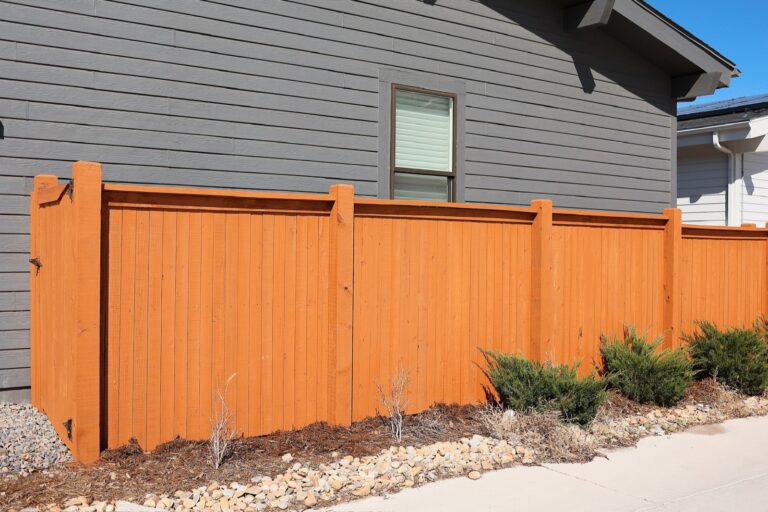
Cedar is the default fence wood around Austin for good reason. It resists decay and insects better than plain pine, and it looks fantastic when cared for. But cedar is not sun-proof. Left bare, it grays quickly under Texas UV, and repeated cycles of soaking humidity and baking heat make boards cup, check, and shrink at the fasteners.
What keeps a cedar fence looking like cedar:
- A protective finish before the gray sets in. Stain blocks UV and slows the moisture swings that move the boards around.
- Watching the sprinkler line. Boards hit by irrigation every morning live in a wetter climate than the rest of the fence and usually fail first.
- Fixing small problems in season. A popped fastener or split board caught early is a minutes-long repair instead of a panel replacement.
Choosing stain for Texas sun
Stain choice matters more in a hard-sun climate. As a rule, the more pigment a stain carries, the more UV protection it gives the wood. A transparent finish shows the most grain but offers the least sun protection. Semi-transparent adds meaningful pigment while still letting the grain read. Solid stain hides the grain but shields the wood the most.
We spec climate-rated stains chosen for the conditions they will actually face, which in Austin means heat and humidity rather than snow. And because staining is where Golden Stain started, the work comes with our written warranty, presented before the job begins: 1 year on transparent, 2 years on semi-transparent, and 3 years on solid stain.
Mildew on siding: wash it softly, and early
The green film creeping up shaded siding is not dirt, it is a living growth, and it holds moisture against your exterior while it spreads. The fix is a soft wash: low pressure plus the right cleaning solution, which kills the growth and rinses it away without blasting paint, mortar, or window seals the way high pressure can.
Timing is the part people miss. Washing early in the season removes the colony before months of humidity turn it into a coating. While the crew is there, driveways and patios can get a proper pressure wash too, since hard concrete tolerates what siding cannot.
Windows after pollen season
Austin runs a pollen relay most of the year. Cedar pollen from the Ashe junipers blankets the area in winter, and then the live oaks take over in spring, dusting everything in yellow-green. By early summer the pollen has mostly quit, which makes it the smart moment for a real window cleaning. Wash them earlier and you are cleaning the same glass twice in a month.
A streak-free professional clean also goes over frames, tracks, and sills, catching failing seals and drainage problems while they are still small.
Deck surfaces and summer heat
Anyone who has walked barefoot on a deck in an Austin August knows surfaces store heat. Darker surfaces absorb more of it, and composite decking in particular tends to get hotter underfoot than natural wood in full sun. Color choice matters on any deck: lighter tones stay noticeably more comfortable than dark ones in the same exposure.
Shade is the other half of the answer. A pergola or shade structure changes how usable a deck is from June through September, and structures like that fall inside our carpentry scope.
Sprinklers, soil, and moving wood
Summer irrigation creates a strange micro-climate: soil and lower boards stay damp while everything above bakes. Wood caught in that split, fence bottoms, deck skirting, post bases, swells wet and shrinks dry over and over, which loosens fasteners and opens joints faster than sun alone would. Aim sprinkler heads away from wood where you can, keep mulch from piling against fence pickets, and give the bottom of the fence line an occasional look. Nobody inspects that part of the yard until something leans.
One crew across the Austin metro
Golden Stain serves Austin, Round Rock, Cedar Park, Pflugerville, Georgetown, Leander, Kyle, Buda, Hutto, and Lakeway. Fence and deck care, soft washing, window cleaning, painting, handyman work, and seasonal services, all from one owner-led team that answers one phone number. Licensed and insured, with a 4.9 star rating across more than 120 Google reviews.
Frequently asked questions
How often should a cedar fence be stained in the Austin heat?
It depends on sun exposure, stain type, and irrigation contact more than on the calendar. The practical test is simple: if water no longer beads on the boards, or the color has faded noticeably on the sunny runs, the finish is due. We check fences board by board during a free estimate rather than quoting a one-size answer.
What is the green stuff on my siding, and can I just pressure wash it?
It is usually mildew or algae feeding on humidity in the shade. High pressure is the wrong tool on siding because it can strip paint, force water behind panels, and damage seals. A soft wash uses low pressure and a cleaning solution to kill the growth and rinse it off safely.
When is the best time to clean windows in Austin?
Right after the spring oak pollen tapers off, in late spring or early summer. Cleaning during peak pollen means redoing the work within weeks. A second cleaning in fall keeps glass clear after summer storms and before the winter cedar pollen arrives.
Does composite decking really get hotter than wood?
In full Texas sun, composite boards often feel hotter underfoot than comparable natural wood, and darker colors run hotter than lighter ones. If bare feet and kids are part of your deck plans, factor color and shade into the design.
Get your free estimate
Want your home ready before the next heat wave settles in? Call or text Golden Stain at 720-233-5487 and we will walk your property, sunny side and shady side, and give you a clear plan. Free on-site estimate. No pressure, no obligation, ever.
Explore more
Ready for the real thing? Browse all our services, the areas we serve across Colorado and Austin, and our home-care journal, then call 720-233-5487 for a free estimate.