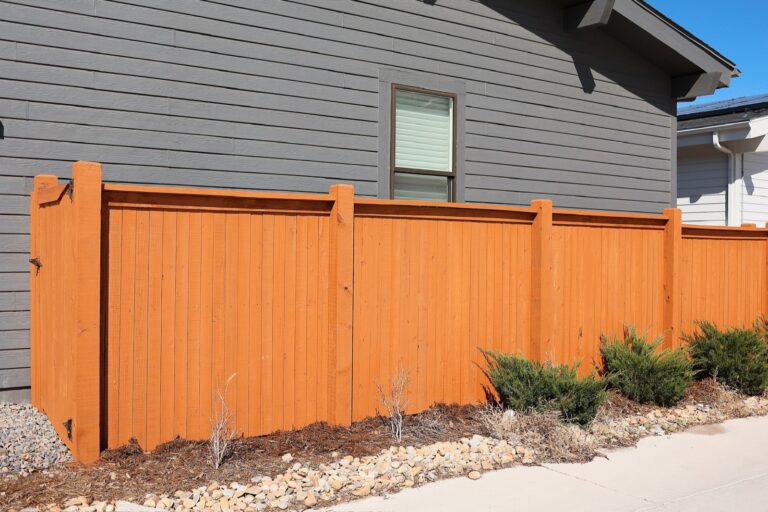
Before you hire anyone to work on your home, verify five things: that they are licensed and insured and can prove it, that their warranty is in writing before work starts, that their bid itemizes the actual scope, that their reviews hold up to a close read, and that their payment schedule keeps you protected until the work is done. A contractor who passes all five is rarely a bad hire; one who dodges any of them deserves a harder look. We are a contractor ourselves, so read this knowing where it comes from. The checklist works no matter who you hire, and that is the point of it.
1. Ask for proof, not promises
“Licensed and insured” is the easiest phrase in the industry to say and the easiest to verify, yet most homeowners never check. Do both of these:
- License. Licensing rules for home contractors vary by trade and by city and county in both Colorado and Texas, so ask what license or registration applies to your job and where you can confirm it. A legitimate contractor knows exactly what they hold and tells you without flinching.
- Insurance. Ask for a certificate of insurance for general liability, and workers’ compensation if they have employees, sent to you directly from their insurance agent. Anyone can print a document; an agent-issued certificate confirms the policy is real and current. If an uninsured worker gets hurt on your property, the problem can land on you.
This step takes one phone call and filters out more bad contractors than everything else on the list combined.
2. Get the warranty in writing, before work starts
A warranty that lives in a handshake does not exist. A real warranty is written, handed over before any work begins, and answers three questions: what is covered, for how long, and who you call when something fails.
“We stand behind our work” is a slogan, not a warranty. As an example, Golden Stain puts staining warranties in writing before work starts: 1 year on transparent stain, 2 years on semi-transparent, and 3 years on solid stain. The terms differ by product because transparent stain genuinely weathers faster than solid; a warranty that reflects how materials behave was written by people who expect to honor it.
Whoever you hire, ask for the warranty document before you sign, not after.
3. Demand an itemized scope, not a one-line bid
Two bids for the same fence can be far apart and both be honest, because they might not describe the same job. The only way to know is line items. A real estimate spells out:
- Prep work: cleaning, sanding, repairs, masking, plant and patio protection
- Materials, ideally by product name, and how many coats
- What is excluded, so surprises live on paper instead of mid-job
- Cleanup and haul-away
- The warranty terms, again in writing
A bid that just says “stain fence” tells you nothing about whether the crew will wash and prep the wood or stain over the gray. If one bid comes in far below the others, the itemized scope usually shows exactly which corners paid for the discount.
4. Read reviews like a detective, not a scoreboard
Star counts are a starting point, not a conclusion. The information is in the patterns:
- Recency. A wall of glowing reviews from years ago and silence since tells a story. Steady reviews over time tell a better one.
- Specificity. Reviews that name the crew, describe the project, and mention details like showing up on time or protecting the landscaping are hard to fake. Ten variations of “great service!” posted the same week are not.
- The bad ones. Skip to the critical reviews and read the company’s responses. What you are evaluating is whether they respond like adults and make it right, or argue with customers in public.
- Consistency across platforms. Ratings should roughly agree everywhere the company appears, and real project photos accumulate over years.
5. Watch the money: deposits and payment schedules
How a contractor asks to be paid tells you how they run their business. Reasonable looks like this: a modest deposit to schedule the work and cover materials, payments tied to progress on larger projects, and the final payment due after a walkthrough. Golden Stain takes major credit cards, bank transfer, cash, and Zelle, with financing on qualifying larger projects; any established contractor should offer traceable ways to pay.
Red flags:
- Demanding most or all of the money before work begins
- Cash only, or a discount for untraceable payment
- Pressure to sign today because the price expires tonight
- No written contract, or a contract with no scope attached
None of these is automatically fraud, but all of them shift risk from the contractor onto you, and you are allowed to decline. Hold anyone bidding work in Golden to the same standard you would hold us to.
6. Know who is actually showing up
Ask one simple question: “Who does the work, and who do I call while it is happening?” Some companies sell the job, then pass it through layers of subcontractors who never saw the estimate. Every layer between the person who promised and the person holding the brush is a place where quality and accountability leak out.
The alternative is a crew where the person accountable for the promise is close to the work. That is how Golden Stain is built: one owner-led team, and Mohamed’s name is on the work. You do not have to hire us to apply it; whoever you talk to, make sure the chain from promise to hammer is short and one number gets answered mid-job. That is the same short chain you get from a crew working in Greenwood Village or anywhere else we serve.
The quick checklist
- Verify the license that applies to your job and your city.
- Get an insurance certificate sent from their agent.
- Get the warranty in writing before work starts.
- Require an itemized scope: prep, products, coats, exclusions, cleanup.
- Read the critical reviews and the responses, not just the stars.
- Keep payments traceable and tied to progress, final payment after walkthrough.
- Confirm who does the work and who answers the phone mid-job.
Contractors worth hiring pass this list without friction, and the good ones are glad you asked. Apply it to bids for West Lake Hills projects and to ours.
Frequently asked questions
How do I check if a contractor is really licensed and insured?
Ask which license or registration applies to your specific job, since requirements vary by trade and by city and county in Colorado and Texas, then confirm it with the issuing office. For insurance, request a certificate of insurance sent directly from the contractor’s insurance agent, not a copy from the contractor.
What should a written estimate include?
The full scope in line items: prep work, materials by name, number of coats, exclusions, cleanup, the schedule, payment terms, and the warranty. If you cannot tell from the paper what the crew will do on day one, the estimate is not finished.
Can I trust online reviews?
Trust the patterns more than the number. Steady reviews over time, specific project details, real photos, and professional responses to criticism are hard to fake; a perfect score made of vague one-liners is easy.
What if a contractor will not put the warranty in writing?
Treat that as your answer and keep looking. A verbal warranty is unenforceable. Companies that intend to stand behind their work write it down first; at Golden Stain the staining warranty (1 year transparent, 2 years semi-transparent, 3 years solid) goes in writing before work starts.
Get your free estimate
If you are lining up bids in Colorado or greater Austin, put us on the list and hold us to every item above. Golden Stain is licensed and insured, puts warranties in writing before work starts, and sends one owner-led crew with one number to call. Free on-site estimate. No pressure, no obligation, ever. Call or text 720-233-5487 and get your free estimate today.
Explore more
Ready for the real thing? Browse all our services, the areas we serve across Colorado and Austin, and our home-care journal, then call 720-233-5487 for a free estimate.