After a hailstorm, do three things in order: wait until it is safe, walk the property and photograph everything that looks off, and then sort the damage into what needs a small repair, what needs a dedicated roofer, and what just needs watching. Hail is a fact of life along the Front Range, and most storms leave a mix of cosmetic scuffs and real damage that is easy to miss from the ground. This checklist covers the whole exterior, and it is honest about where Golden Stain can help and where you need a dedicated roofing company instead.
First: safety, then a slow walk
Wait for the storm to fully pass. Watch for downed lines, broken glass, and slick walks. You do not need to get on the roof. Most of this checklist works from the ground with your eyes, your phone camera, and a few minutes of patience.
The roof: what hail actually does to shingles
Hail rarely punches clean holes in a roof. What it does is subtler and shows up over time.
- Bruises and dents. Impact crushes the shingle mat under the granules. From the ground you may see dark dots or circular marks scattered across a slope, often denser on the side the storm came from.
- Granule loss. Granules are the shingle’s sunscreen. Hail knocks them loose, and Colorado UV then ages the exposed asphalt fast. A heavy load of granules in the gutters after a storm is a message from your roof.
- Cracked, torn, or lifted shingles. Wind-driven hail can crease edges or lift tabs. A shingle that no longer lies flat lets wind and water start working underneath.
- Soft metal tells the truth. Dents in gutters, downspouts, roof vents, and flashing are easy to spot. If the soft metal took visible hits, the shingles took them too.
Fresh water stains on top-floor ceilings or in the attic move a roof from inspect soon to act now.
Gutters and downspouts
Check gutter runs for dents, separated seams, and sagging. Confirm downspouts are attached and their extensions still point away from the foundation. A gutter knocked out of alignment quietly sends roof water against the foundation or behind the fascia. Dented but functional is a cosmetic call. Leaking or detached is a repair worth doing before the next storm.
Fence and deck finishes
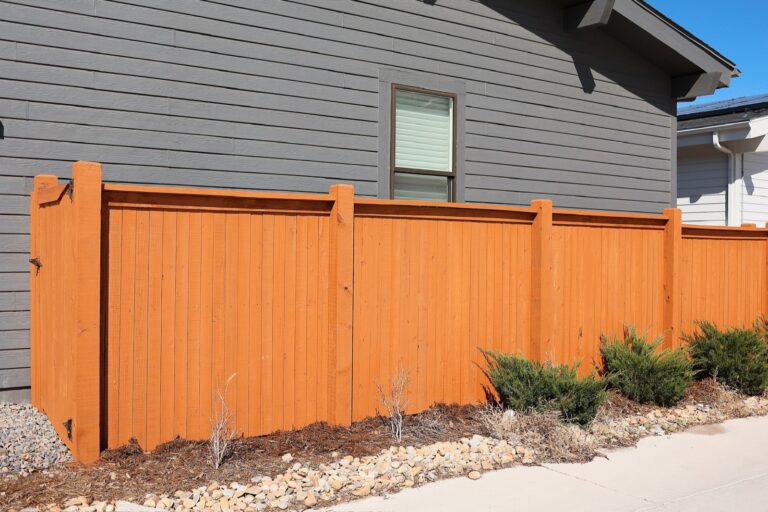
This is the damage almost everyone misses, and the one we know best. Hail hits deck boards and the storm-facing side of a fence at full force, and each impact bruises the wood and breaks the stain film at that spot. You may see a spatter of light dots across a stained surface, or nothing at all until next season, when every impact point grays first as water gets into unprotected wood. After a significant storm:
- Look across deck boards at a low angle in good light. Impacts show as flecks or shiny bruises.
- Check fence rails and pickets on the side the storm came from.
- Look for actual splits or cracked board edges, which are repair items, not just finish items.
The fix is usually simple: clean, repair any damaged boards, and refresh the stain so the wood is sealed before the damage spreads. Caught early, it stays a maintenance job instead of a restoration job.
Siding, window trim, and paint
Walk each side of the house, especially the storm-facing one. Look for chipped or cracked paint on wood trim, dents in siding, cracked window sills, and torn screens. Paint chips are small but not trivial: every chip is bare wood open to sun and snowmelt, and trim rots from exactly these spots. Scraping, priming, and touch-up painting is quick work that prevents expensive carpentry later.
Concrete: look for spalling
Hail alone rarely breaks concrete, but hail season and freeze-thaw season overlap in Colorado, and water is the common enemy. Check driveways, walks, and patios for spalling, the flaking or pitting where the smooth surface layer pops off and exposes the aggregate underneath. Once the surface is open, water gets in, freezes, and widens the damage every winter. Small spalled areas can be repaired and protected with a quality concrete sealer, a fix sized to the problem that keeps a driveway from becoming a replacement project.
Document everything, then call your insurer
- Photograph every area of damage, wide shots for location and close-ups for detail.
- Note the storm date and, if you can, the approximate hail size you observed.
- Keep damaged materials until you have decided how to proceed.
- Contact your insurance company, report what you found, and follow their process.
That is the extent of our insurance advice: document well and talk to your insurer. We are not an insurance claims contractor. And be cautious with door-knockers who appear after every Front Range hailstorm promising a free roof.
Small repair, or dedicated roofer? An honest sorting guide
Golden Stain handles small-scale roofing fixes, gutter work, fence and deck repair and refinishing, trim carpentry and painting, and concrete repair and sealing. We do not do full roof replacements or insurance restoration work, and we will tell you plainly when your damage is beyond our scope.
A small repair is usually enough when
- Damage is localized: a few damaged shingles, a dented vent cap, a short run of loosened flashing.
- Gutters need reattachment, sealing, or a replaced section.
- The roof is otherwise sound and not near the end of its life.
- The main damage is to fences, decks, trim, paint, or concrete, which is exterior work, not roofing.
Call a dedicated roofing company when
- Impact marks or granule loss spread across whole slopes rather than a spot or two.
- You have active leaking or fresh interior water stains after the storm.
- The roof was already old, and the storm may have finished it.
- Your insurer’s process involves a full inspection and potential replacement.
One team, one number, one standard of care applies here too: sometimes the right care is telling you to call a roofer, and handling everything else on the list.
How hail ages stain and paint over time
The sneaky thing about hail is the delay. A stained fence or painted trim can look fine the week after a storm, because the damage is hundreds of tiny breaches in the finish, not one obvious wound. Colorado’s high-altitude UV and freeze-thaw cycles then work on every breach, and months later the surface grays or peels in a spotty pattern while water reaches bare wood underneath. After a serious storm, move a planned restain or repaint up the calendar rather than back.
Frequently asked questions
Does hail damage always mean I need a new roof?
No. Plenty of storms leave cosmetic marks or damage limited to a few shingles, vents, or flashing, and a small repair restores full protection. Widespread impact damage across slopes, ongoing leaks, or an already-old roof push toward replacement, and that is when a dedicated roofer should take over.
My stained fence looks fine after the hailstorm. Should I still do anything?
Give it a close look and a follow-up. Check the storm-facing side at an angle for impact flecks, and watch it over the next few months. If gray spots appear where hail hit, the finish was breached and the wood is taking on water. A wash and a fresh coat of stain reseals it, and doing that early is much cheaper than restoring gray wood later.
What hail-related repairs does Golden Stain actually do?
Small-scale roofing fixes like replacing a few shingles or resealing flashing, gutter and downspout repair, fence and deck board repair and refinishing, window trim and exterior paint touch-ups, and concrete spalling repair and sealing. We do not do full roof replacements or insurance restoration projects. Licensed and insured, owner-led, 4.9 stars across 120+ Google reviews.
Get your free estimate
Storm rolled through your neighborhood? Have us walk the exterior with you. We will point out what is cosmetic, what needs a fix, and what belongs with a dedicated roofer, then handle the repairs that fit our scope, from gutters and trim to fence, deck, and concrete. Free on-site estimate. No pressure, no obligation, ever. Call or text 720-233-5487 or email info@goldenstain.com.
Explore more
Ready for the real thing? Browse all our services, the areas we serve across Colorado and Austin, and our home-care journal, then call 720-233-5487 for a free estimate.